)%20(1)_edited.jpg)

On Site Today: Pulling Samples from the Navarro – High-Plasticity Marl That Demands Respect

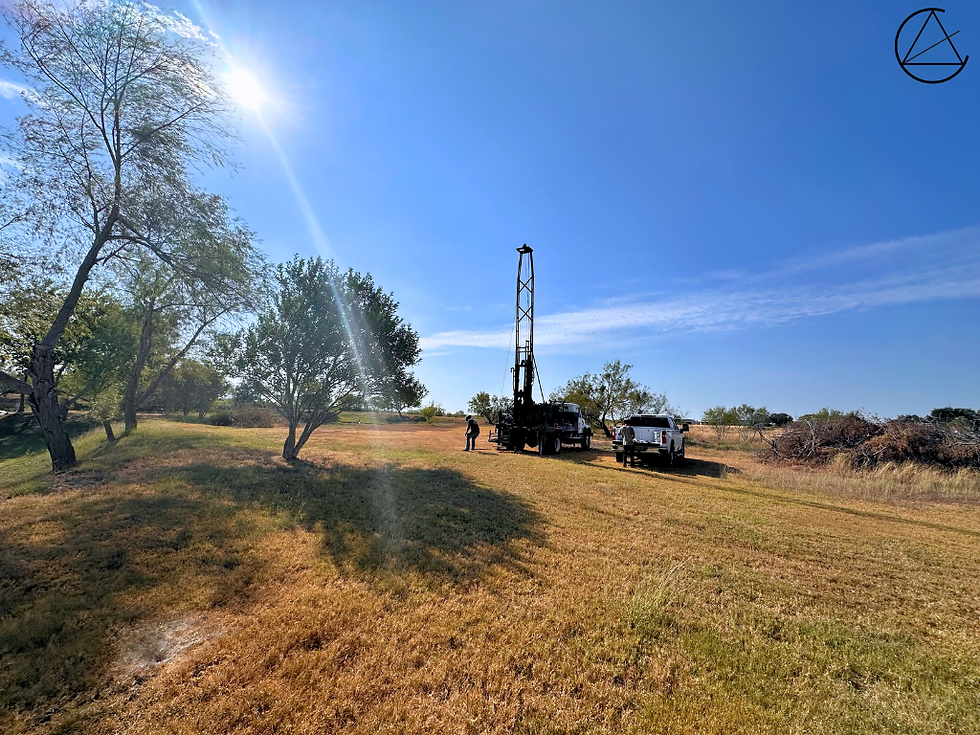
The drill rig has been busy this week under clear Texas skies, and the shelby tube samples tell a familiar (and challenging) story: we’re firmly in the Navarro Group, specifically the Marlbrook Marl member. These Upper Cretaceous Gulf-series sediments are classic for this part of the region — dark gray to bluish-gray, blocky to waxy, extremely high-plasticity montmorillonitic fat clays (CH) with just enough calcareous content to earn the name “marl.”
If you’ve built anywhere along or east of I-35 in Central Texas, you’ve likely met the Navarro before. It’s one of the most active and problematic soils in the state.
Why the Navarro/Marlbrook Marl Keeps Geotech Engineers Up at Night?
Sky-High Swell Potential
Liquid limits routinely 80–120+, Plasticity Index 50–80+. These are some of the highest PI clays in Texas.
Montmorillonite = Moisture Magnet
The dominant clay mineral is montmorillonite, which has an expanding lattice structure. It soaks up water like a sponge and can double or triple in volume.
Very Low Shear Strength When Wet
Undrained shear strengths can drop significantly in wet seasons. Excavations left open overnight after rain often turn into soupy messes or fail along slickensided planes.
Slickensides Everywhere
Samples after samples may show polished, curved shear surfaces — remnants of countless ancient wet/dry cycles. These pre-existing failure planes are ready to daylight the moment you cut a slope or place fill.
The samples coming up are textbook Navarro — blocky, sticky when wet, rock-hard when dry. There are no surprises here; just the same old adversary we’ve wrestled with on dozens of projects before.
Better to know exactly what you’re fighting. Now we design the mitigation package and make sure the contractor prices it correctly from the start.
More from the field as the lab results roll in!




Comments